Theia's Secret | Moon's Origin SHOCKS Scientists!
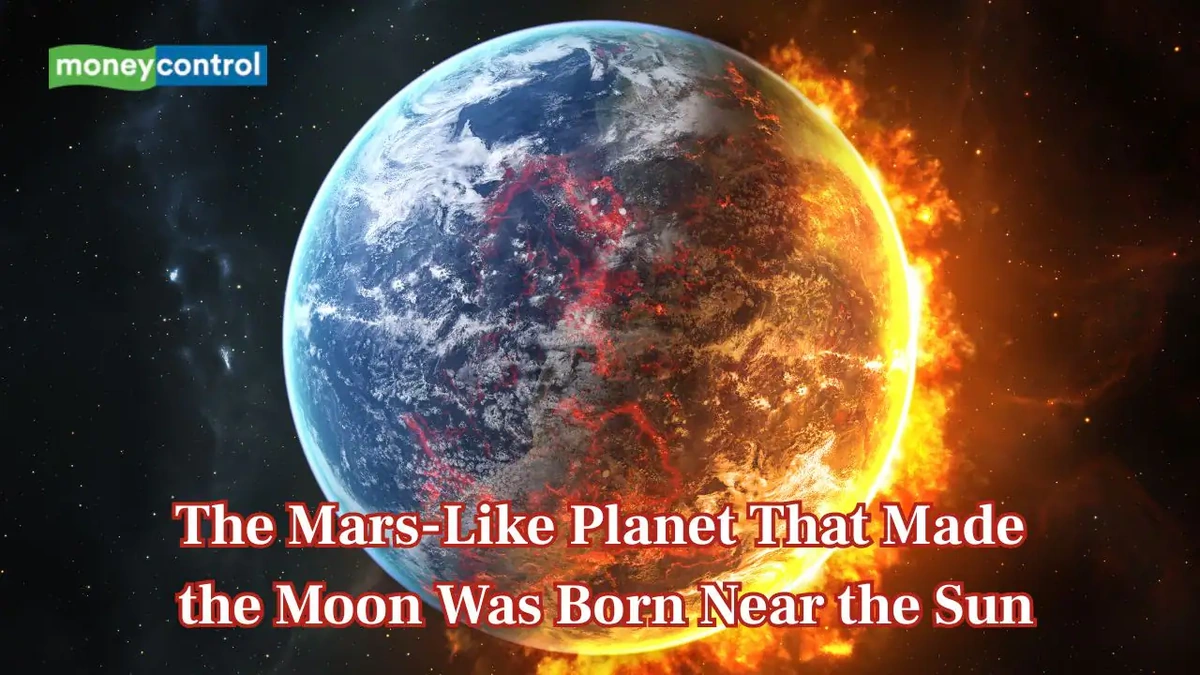
Okay, cosmic history buffs, buckle up. There’s a new twist in the tale of how our Moon came to be, and it’s a big one. For years, the prevailing theory has been that a Mars-sized object – Theia – collided with early Earth, and the debris from this cataclysmic crash eventually coalesced into the Moon. But a fresh study is shaking things up, suggesting that Theia wasn’t some random space wanderer; it actually originated from within our own inner solar system. Let’s dive into the implications, because this isn’t just about ancient history – it tells us a lot about planet formation itself.
The Giant-Impact Hypothesis | A Quick Recap
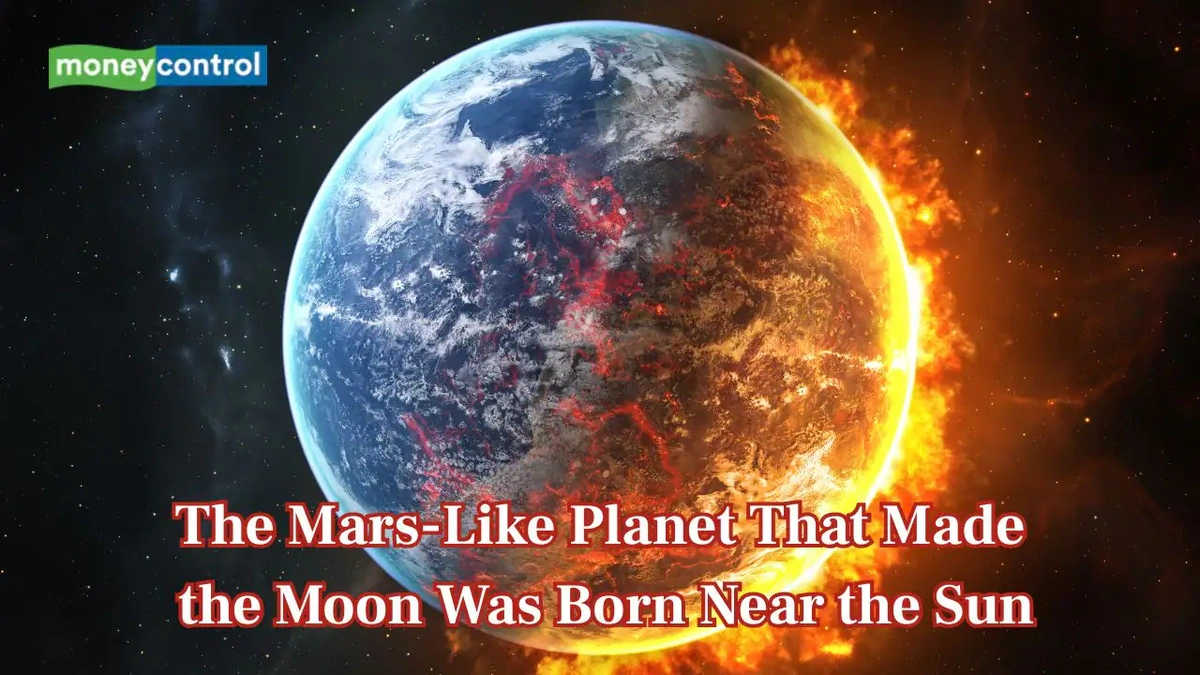
Before we get too far ahead, let’s refresh our memory on the giant-impact hypothesis . It’s the leading explanation for the Moon’s origin. The idea is that early Earth, not long after its own formation, was struck by a massive object dubbed Theia. This impact was so forceful that it ejected huge amounts of material into space. This material, a swirling mix of Earth and Theia’s matter, gradually clumped together under gravity’s influence, eventually forming the Moon. But , here’s where it gets interesting: the composition of the Moon is remarkably similar to Earth’s. This has always been a bit of a puzzle, because if Theia was a completely different object from another part of the solar system, we’d expect the Moon to have a more distinct chemical signature.
The New Twist | Theia’s Inner Solar System Origins
Here’s the thing: this new study, published in a rather important journal (you can find it here ), presents compelling evidence suggesting that Theia wasn’t some far-flung visitor. Instead, it likely formed in the inner solar system, perhaps even in the same orbital neighborhood as Earth. What fascinates me is, this conclusion comes from meticulous analysis of lunar samples brought back by the Apollo missions. Scientists looked at the isotopic composition – specifically, the ratios of different oxygen isotopes – in these samples. And guess what? The lunar samples are almost identical to Earth’s, even more so than previously thought. This strongly implies a shared origin.
Why Does This Matter? Understanding Planet Formation
So, why should we care where Theia came from? Well, it’s not just about filling in blanks in the cosmic storybook. This discovery has profound implications for our understanding of planetary formation in general. If Theia and Earth formed in the same region of the solar system, it suggests that planet formation might be a more localized process than we previously thought. Maybe protoplanets tend to coalesce from material within a relatively narrow orbital zone. Moreover, it could also mean that giant impacts, like the one that formed the Moon, were more common in the early solar system than we realized. These impacts could have played a crucial role in shaping the planets we see today.
Let me rephrase that for clarity: understanding the origin of Theia helps us understand the very building blocks of our solar system and others like it. And , that’s pretty cool, right? The implications ripple outwards, informing everything from our understanding of inner solar system dynamics to the potential for life on other planets. After all, giant impacts can deliver essential elements like water and organic molecules to nascent planets.
Implications for Future Research
This study also opens up some exciting avenues for future research. For example, scientists will want to analyze more lunar samples, especially those from different regions of the Moon, to see if the isotopic similarity holds true across the board. They’ll also want to refine their models of the giant impact to better understand how a collision between two objects with such similar compositions could have resulted in the Moon we see today. A common mistake I see people make is thinking science is settled and static. It isn’t! Discoveries like this are just one step in understanding a complex story that’s still being written.
And then there’s the question of other planetary systems. Could similar giant impacts have occurred around other stars, creating moons or even influencing the habitability of planets? That’s a question for future telescopes and missions to answer. Speaking of missions, I’ve been following the progress of NASA’s Artemis program , and the prospect of returning to the Moon with advanced instruments is incredibly exciting. Imagine the insights we could gain from analyzing even more lunar samples with cutting-edge technology!
This reminds me, I read an interesting article about the Theia-Earth collision a while back. This really adds to the discussion.
What fascinates me is the potential of lunar samples to unlock even more secrets of the solar system.
Here’s the thing: this new study doesn’t completely overturn the giant-impact hypothesis. But it adds a crucial layer of nuance and complexity. It suggests that the formation of the Moon was even more intimately linked to Earth’s own origins than we previously imagined. The Theia impact is much more complex than scientists previously imagined.
This also ties into a topic that I am fond of – benefits . This isn’t directly related, but science is important for everything.
FAQ Section
Frequently Asked Questions
What exactly is an isotope?
Isotopes are versions of an element with the same number of protons but different numbers of neutrons. This affects their mass and can be used to trace the origins of materials.
How do scientists know the age of the Moon and Earth?
Scientists use radiometric dating techniques, which involve measuring the decay of radioactive isotopes in rocks and minerals, to determine their age.
Could another impact event have affected the Moon’s composition?
It’s possible, but the leading theory is the giant-impact hypothesis. Subsequent impacts are less likely to have significantly altered the Moon’s overall composition.
What if Theia came from even closer to Earth than we thought?
That’s the implication of this study! The data suggests a very similar origin for Earth and Theia, possibly even the same orbital zone.
Are there any plans for future lunar missions?
Yes! NASA’s Artemis program aims to return humans to the Moon and establish a long-term presence there, which will enable further scientific exploration.
How does this affect our understanding of the Earth’s early atmosphere?
Understanding the Theia impact could tell scientists more about the composition of the early Earth .
The real takeaway here? Science is a constantly evolving story. This new study on Theia’s origin is not the final word, but an invitation to deepen our understanding of the cosmos. And that, my friends, is something to be excited about. We are still trying to understand the moon-forming impact .
About the Author